
When and why did Iran even get a morality police?


22-year-old Mahsa Amini died in the custody of Iran's morality police after which there have been countrywide protests against the government. Photo: Getty Images
Iran's morality police, also known as Gasht-e-Ershad, has been in the eye of a storm for several months now, since the death of 22-year-old Mahsa Amini earlier this year. Iran's public prosecutor general Mohammad Jafar Montazeri, in a religious conference, has said that the country's dreaded morality police has been disbanded. However, the statement seems far from the truth.
- Montazeri said that "they have been shut down from where they were set up," BBC reported.
- However, there was no confirmation from the Interior Ministry, and the state media said that the public proscecutor wasn't responsible for overseeing the force.
- The Iran government also did not confirm the move. Instead, it said that his remarks were "misinterpreted".
The country has been rocked by protests for the past three months, in which at least 470 have died and more than 18,000 have been detained by the Iranian authorities.
- The morality police, in whose custody Mahsa Amini died for not wearing her headscarf properly, has been the reason why people of Iran are out on the streets.
What is Iran's morality police? Iran has had different morality police since the Islamic revolution of 1979, but the latest version, formally known as Guidance Patrol or Gasht-e-Ershad, is the main agency tasked with enforcing Iran's Islamic code of conduct.
- The group started their patrols in 2006 to enforce a dress code which requires women to wear long clothes, and forbid skirts, ripped jeans and other clothes that are deemed immodest.
- The group was also empowered to admonish suspects, impose fines and arrest members of the public.
- However, the new reforms made for the morality police in 2022 prevented them from taking any of these actions.
- The group Gasht-e-Ershad is said to draw a lot of personnel from Basij, a hard-line paramilitary unit which also includes women.
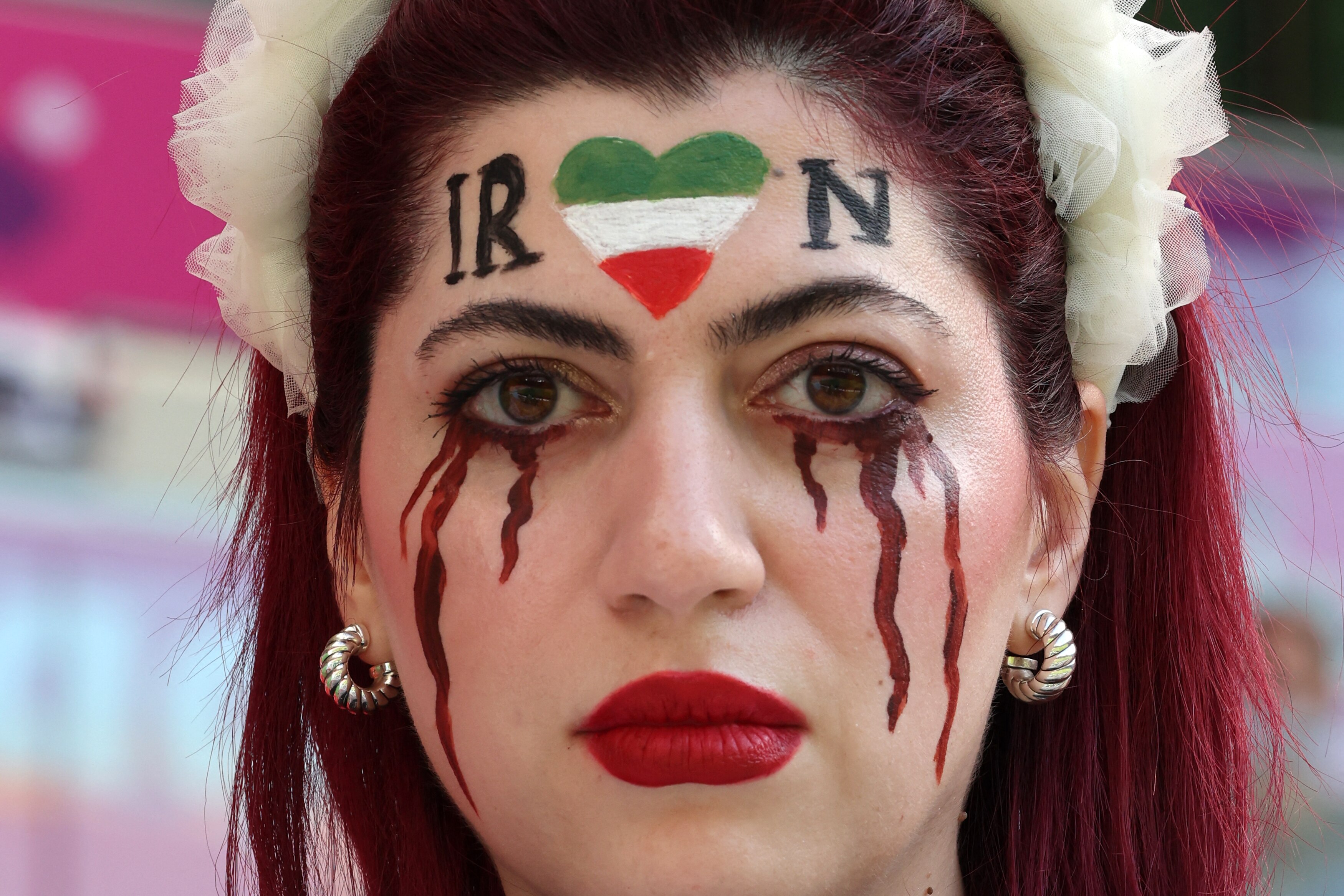
Women of Iran have taken to streets ever since Mahsa Amini was killed by Iran's morality police in September 2022. Photo: Getty Images

What Iranians think of the morality police: Iran's morality police has been a big headache for women ever since it came into being. They are seen as a group that forces draconian laws on women. Also, men with Western hairstyles are also at the risk of being intimidated by the morality police.
- The disdain for the morality police also led people to evade Gasht-e-Ershad checkpoints through an Android app, which was developed by Iranian app developers in 2016.
The contested hijab in Iran:
- Iran has a long history as far as the hijab goes. During the rule of Reza Shah Pahlavi in 1936, the hijab was banned. This was done to modernise the country.
- The police, then, was tasked with removing the hijab from the heads of women who wore it in public.
- However, things changed after the Iranian revolution in 1979, when Ayotallah Ruhollah Khomeini deposed Mohammed Reza Pahlavi, the son of Reza Shah and took over the Islamic republic.
- Wearing of hijab was made compulsory in the 1990s and a force was constituted to enforce these rules.
- This was also done after the war with Iraq's Saddam Hussein began and the regime felt the need to underline Iranian National identity.
- Over the years, few leaders like former President Hasan Rouhani have made references to personal freedoms and dignity.
What now: Since the death of Mahsa Amini, it is expected that the Iranian government will indeed make some concessions in the rules imposed by the morality police.
The Interior Ministry, under whose jurisdiction the morality police falls, has not yet made any comment on any concessions in the laws so far; let alone disbanding the morality police altogether.